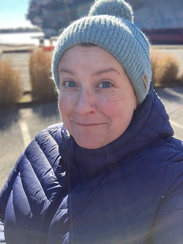
Welcome
I recently completed my Ph.D. in Political Science at Yale University, and I work as a consultant to the Human Rights Data Analysis Group at Benetech, Inc. I have also worked with groups like UN Action Against Sexual Violence in Conflict as a statistical consultant. My dissertation documents and explains variations in the types of violence that armed groups use against noncombatants, showing that political education programs can limit repertoires of violence against civilians during armed conflicts. More generally, I am interested in how information, ideologies and behavioral norms are transmitted through hierarchical organizations (see my Research page and my CV for more information).
News
22 December 2011: Heading to Drexel
After a whirlwind job-hunting season, I'm thrilled to announce that I've accepted Drexel University's offer of an Assistant Professorship in the Department of History and Politics, starting fall 2012. At Drexel, in addition to teaching courses in comparative politics and human rights, I plan to continue the process of turning my dissertation manuscript into a real live book. Joining me in the department next fall is Erin R. Graham, an Ohio State Ph.D. currently on post-doc at Princeton, who does great work on international organization performance. Jarrod, Watson and I are incredibly excited to be in Philadelphia, close to many friends, an(other) amazing food scene, and my undergraduate mentors at Swarthmore. Go Dragons!
17 November 2011: Dissertation approved; article accepted.
I'm happy to report that my dissertation, Repertoires of Violence Against Noncombatants: The Role of Armed Group Institutions and Ideologies, was formally approved by the Department of Political Science at Yale University on November 3. My diploma will be issued early next month. In other excellent news, a piece I co-authored with Dara Cohen has been accepted at the Journal of Peace Research. The article, "Dueling Incentives: Sexual Violence in Liberia and the Politics of Human Rights," explores how a factually incorrect statistic about sexual violence during the Liberian civil war became conventional wisdom. More broadly, it discusses the incentives facing human rights actors as they attempt to direct attention and resources to the issues they consider most serious -- particularly the (potentially) conflicting incentives to create immediate attention and to create long-term public trust.
1 August 2011: New article in Foreign Affairs!
Dara Cohen, Amber Peterman, Tia Palermo and I have just published a quick guide to understanding wartime rape reporting. It's exciting to see a piece in a broader-audience publication like Foreign Affairs, since quite a lot of "broader audience" publications tend to publish the sort of sensationalist stuff that our work is intended to question. Even more exciting: the piece was picked up by a favorite human rights blog, Wronging Rights. The Wronging Rights post also has a link to Maria Eriksson Baaz and Maria Stern's work on sexual violence in the DRC, which is an excellent corrective to the aforementioned "sensationalist stuff."